SYSTEMS AND AI READINESS DIAGNOSTIC
Find where AI fits.
And what needs fixing first.
Disconnected tools. Manual handoffs. AI ideas without a clear starting point. We map your systems, identify what needs fixing, and give your team a prioritized plan for what comes next.
How the diagnostic works
01
Scoping / access
We confirm your business, your team, and where work gets stuck.
02
Interviews
We speak with the people doing the work, not only the owner.
Lite: 1 interview. Full: 1 per functional area involved, usually 4–6.
03
Ecosystem audit
We map each tool, its connections, and where data gets retyped or lost.
04
Deliverable
Ranked findings, quick wins, and a phased execution blueprint.
Written report: Lite 4–6 pages. Full 8–14 pages.
05
Walkthrough
We walk through your findings and deliverable together, live.
The diagnostic is a paid assessment with a defined method and standalone deliverables, not a sales call. Start with an intro call to discuss fit and scope.
An AI readiness assessment with a plan your team can act on
See how your tools connect, what to fix first, and how to move forward. Your diagnostic includes an interactive web deliverable, written synthesis, and live walkthrough. The examples below are illustrative, not client findings.
Systems map
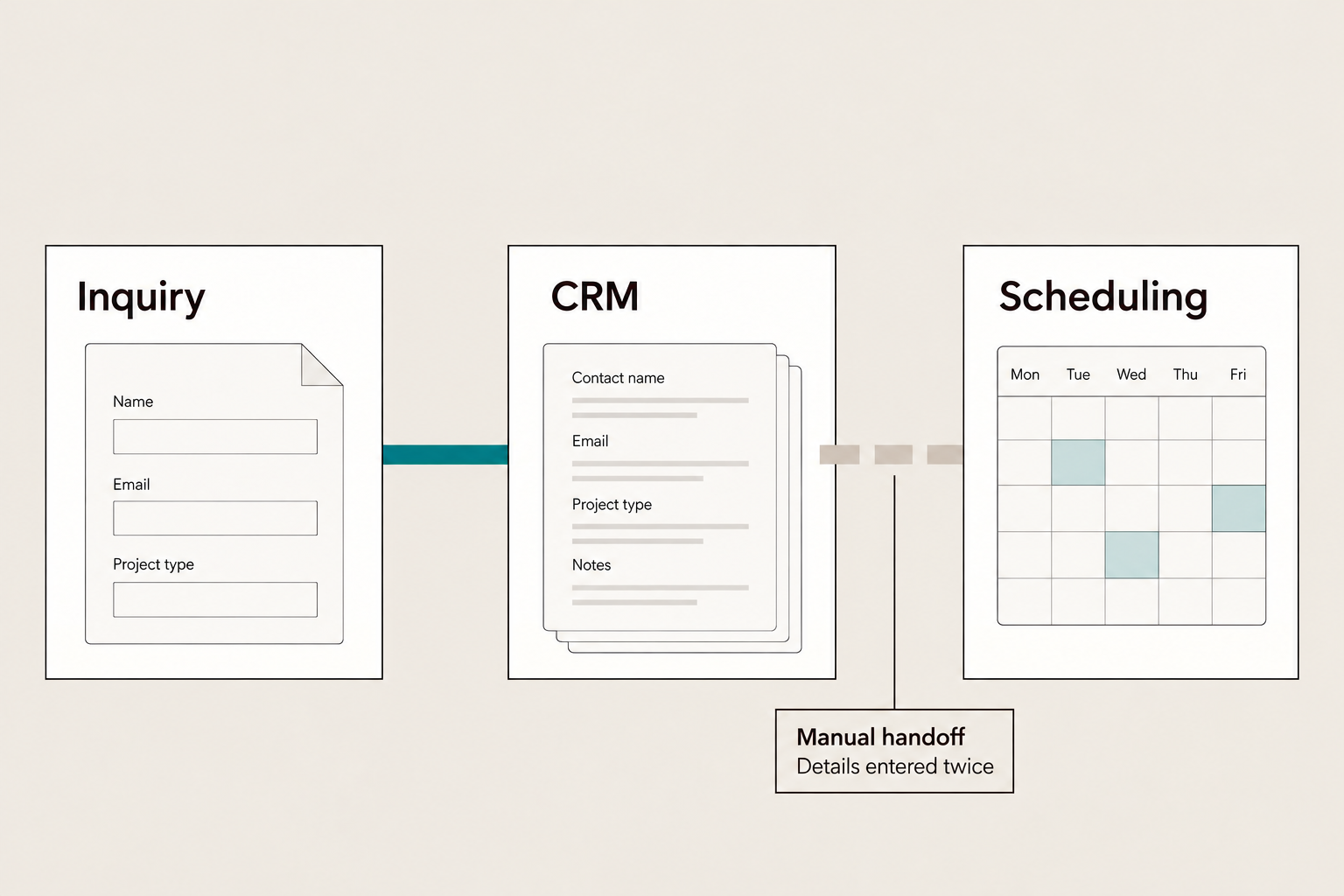
Inquiry → CRM → Scheduling
A manual handoff between the CRM and scheduling tool means details are entered twice.
Example only. Not client findings.
Prioritized findings
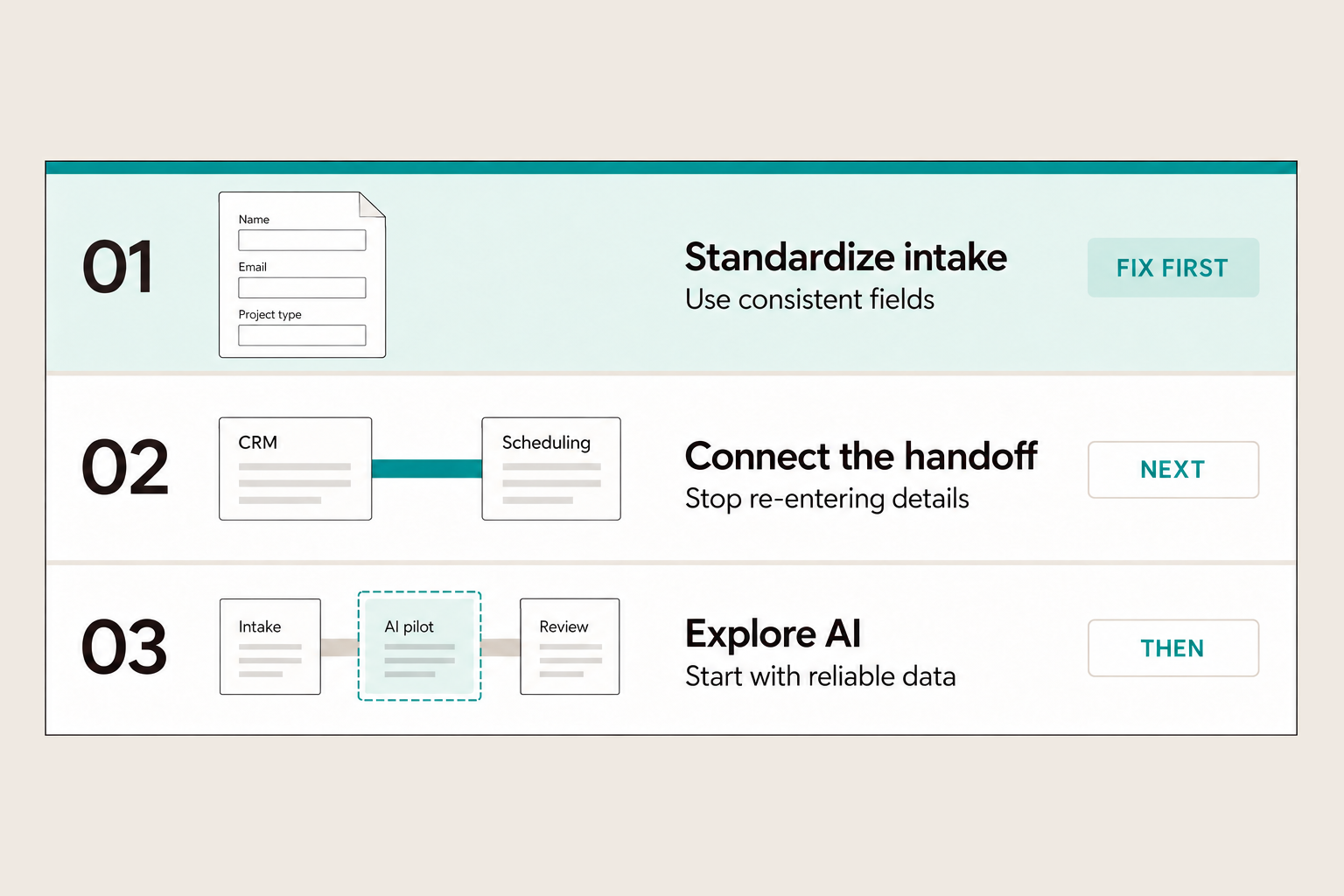
First: Standardize the intake fields.
Next: Connect the scheduling handoff.
Then: Explore AI once reliable data reaches the right place.
Phased plan
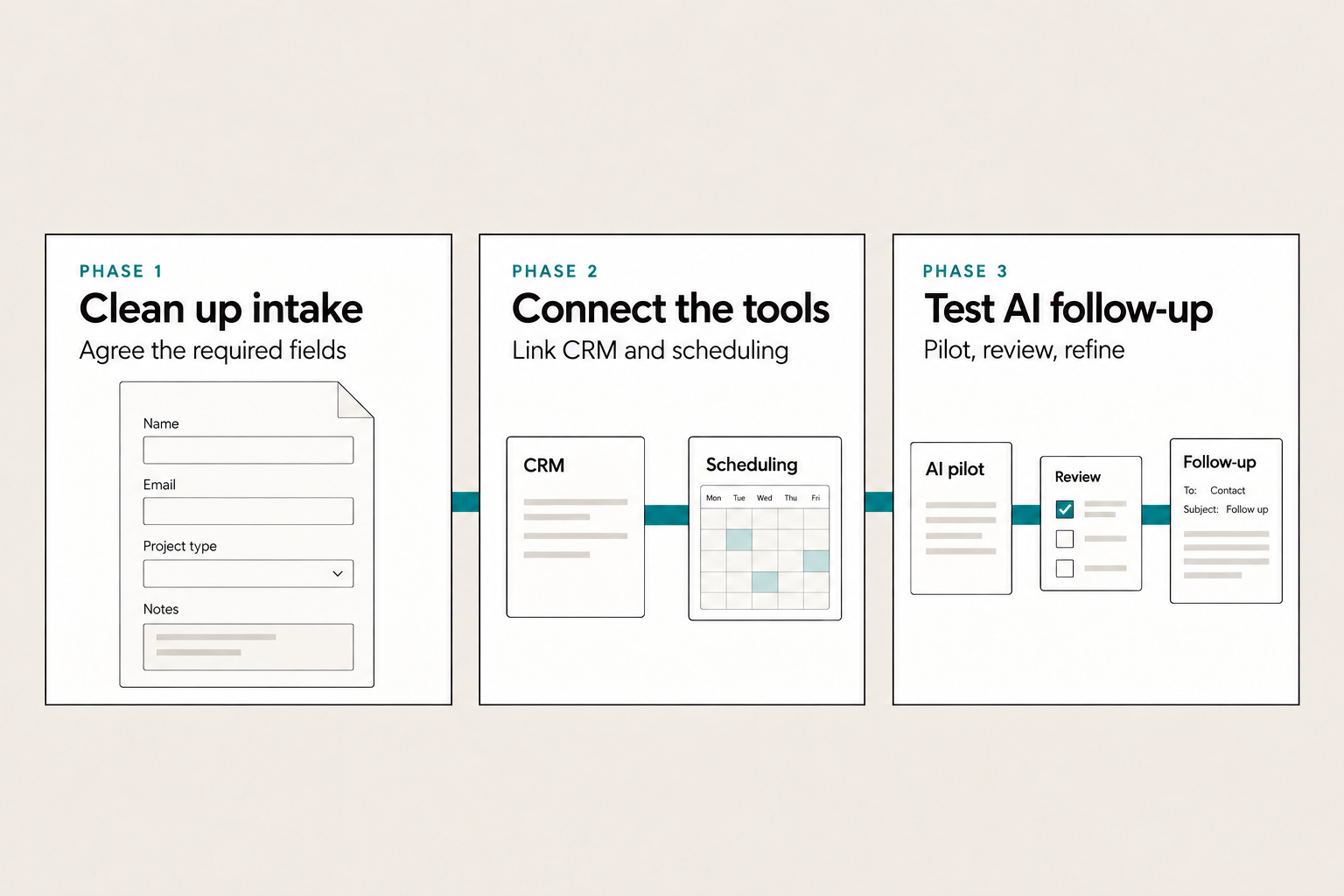
Phase 1
Clean up intake
Phase 2
Connect the tools
Phase 3
Test AI-assisted follow-up
Each phase builds on the one before it.
Two scopes. The same clear next step.
Diagnostic Lite
One focused problem. A clear path forward.
- 1 stakeholder interview
- Ecosystem review
- 4–6-page written report
- 7–10 business days
Diagnostic Full
Interconnected problems. One coordinated plan.
- Stakeholder interviews across each function involved, usually 4–6
- Deep audit and integration mapping
- 8–14-page written report
- 3–4 weeks
Both include an interactive web deliverable, written synthesis, and live walkthrough. Not sure which scope fits?
Your plan. Your choice.
Build with us
Turn the priorities into action with Foundari. Start with one focused win or a coordinated build.
Build with your team
Give your internal team a clear path forward. Use the systems map, findings, and implementation plan to prioritize the work and build at your own pace.
Build with another team
Take the systems map, findings, and implementation plan to another implementer. There’s no obligation to build with Foundari.
Decide later
Keep the blueprint and choose when to act. The next step is yours.
Your questions, answered
What does the diagnostic actually produce?
You receive an interactive web deliverable and a written synthesis report. They cover your systems map, integration gaps, ranked findings, quick wins, and a phased execution blueprint. We walk through the deliverable with you live, and the written report is detailed enough for another implementer to act on.Is this just a sales call for a bigger project?
No. This is a paid diagnostic with a defined method and standalone deliverables, not a sales call. We interview your team, review your systems, and deliver an interactive web deliverable and written synthesis in a live walkthrough. The plan is yours to use with Foundari, another implementer, or your own team. There is no commitment to a follow-on build.
How is Lite different from Full?
Diagnostic Lite focuses on one problem area and includes 1 stakeholder interview, an ecosystem review, and a 4–6-page written report, delivered in 7–10 business days. Diagnostic Full covers interconnected problems with stakeholder interviews across each function involved, usually 4–6, a deep audit and integration mapping, and an 8–14-page written report, delivered in 3–4 weeks. Both include an interactive web deliverable, written synthesis, and live walkthrough. Timing depends on scheduling.How much of my team's time does it take?
Plan for a 45–60-minute scoping/access call, 30–45 minutes per stakeholder interview, and a 45–60-minute live walkthrough. Lite includes 1 stakeholder interview; Full includes 1 per functional area involved, usually 4–6. These are meeting durations, not a total team-hours estimate or an allowance for preparation. We confirm who needs to be involved and scheduling during scoping.What if we decide not to move forward?
The plan is yours to keep. You can implement it with your own team, use another implementer, or decide later. There is no commitment to further work with Foundari.