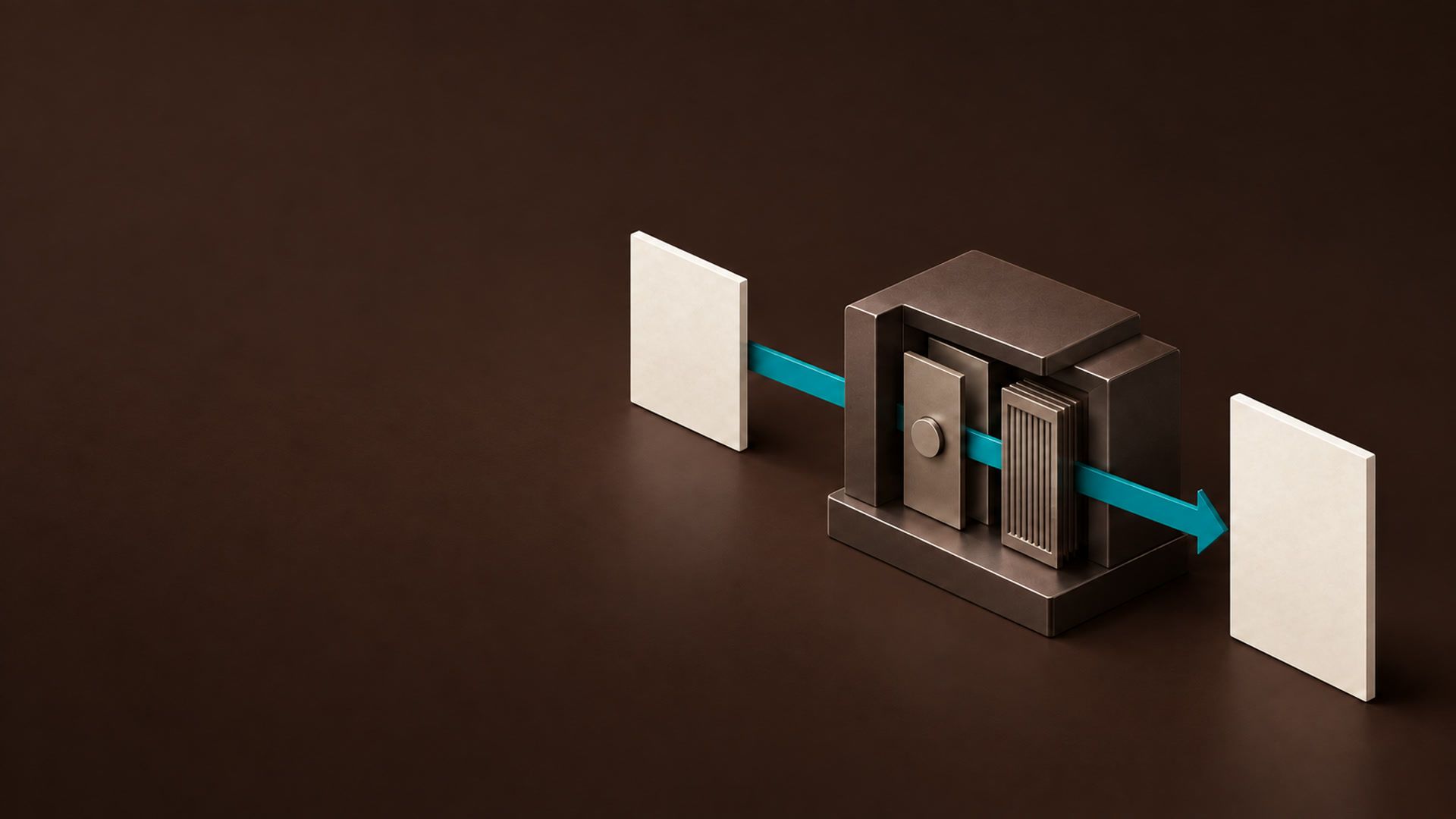
Your brand isn't a logo (It's a growth engine).
Share this article
A logo doesn't build momentum. Systems do. Here's why the most powerful brands treat storytelling like infrastructure, not decoration.

The Visual-Only Brand Trap
Let’s start with a common misconception. When someone says “work on your brand,” most people think of a new logo, a refreshed color palette, or maybe a snazzy tagline. We get it—we’ve seen it a thousand times.
But here’s what we’ve learned after years of helping businesses scale: most small and mid-sized companies aren’t failing because of poor design. They’re stalling because their brand story and their growth systems aren’t connected.
Think about it. Modern businesses operate in a world where every single touchpoint—websites, CRMs, emails, automations, even chatbots—either builds trust or breaks it. A beautiful visual identity without systemized messaging is like buying a sports car without an engine. Impressive to look at, but going nowhere.
Your brand isn’t an afterthought you polish when you have time. It’s the engine that drives everything else.
Why Systemized Storytelling Actually Matters
Here’s the paradox of 2025: businesses have more tools than ever, and less clarity than ever.
There’s Zoho, HubSpot, countless AI solutions, and automation platforms promising to streamline everything. And what happens? Most businesses end up with disconnected systems that dilute their message instead of amplifying it.
We see it constantly. Marketing says one thing. Sales pitches another. The website tells a third story. Automated emails sound like they came from a completely different company.
The fix isn’t another tool. It’s systematic storytelling.
That means a unified messaging framework that keeps your story consistent across every platform, a documented brand system that guides tone, visuals, and experience—not just a logo—and a technology stack that actually connects storytelling to customer data, automation, and analytics.
According to HubSpot’s 2025 SMB Insights Report, businesses with systemized brand messaging see 38% higher lead-to-close ratios and 42% better campaign ROI. Why? Because clarity converts.
At Foundari, we call this the Brand + Growth System—where strategy, automation, and storytelling come together to create real growth infrastructure, not just pretty marketing.
If you want to see how ready your brand and systems are to support long-term scalable growth, start with a Brand Readiness Audit.
How We Build Brand as a System
Every engagement at Foundari starts with one question: What story does your system tell?
Not what your logo looks like. Not what your tagline is. What story are your actual systems telling your customers?
Diagnose (Discovery & Narrative Audit)
We analyze your entire brand ecosystem—website, content, automations, and customer touchpoints. We’re looking for disconnects between what you say you are and what your systems show you are.
Define (Messaging Framework)
We build a Strategic Storytelling Framework that clarifies your brand’s purpose, promise, proof, and personality. Think of it as the DNA that informs every decision that follows.
Design (Identity & Experience)
Now—and only now—we create the visual and digital identity. This isn’t design for design’s sake. It’s design as a reflection of your message, built for clarity and recognition.
Deploy (Automation & Distribution)
This is where it gets powerful. We use tools like Zoho One, Zapier, and AI automation to turn your messaging into working systems. Your story becomes operational, not just aspirational.
Optimize (Data-Driven Growth Loop)
We set up analytics dashboards that connect story, design, and automation so you can see what’s working, what isn’t, and where your message is landing—or falling flat.
Real Example: From Fragmented to Focused
Let us tell you about CoreLink Systems, a mid-market CRM and ERP implementation agency with deep technical expertise in Zoho and Salesforce.
When they came to us, they had a problem: they couldn’t scale their own business.
Their messaging focused too heavily on software features instead of business outcomes. Marketing spoke in technical jargon while sales pitched transformation—two completely different languages. Their CRM stack was powerful, but misaligned with their actual story. No one could clearly explain what made them different.
We ran CoreLink through our Brand Growth System over 90 days.
We aligned their story by reframing their positioning from “implementation partner” to “growth system architect.” Same work, completely different frame. We developed a simple three-part messaging framework—Streamline. Systemize. Scale.—that everyone in the company could repeat. We updated their visual system with cleaner typography and more confident color choices that matched their expertise. We unified Zoho CRM, Books, and Campaigns under one consistent narrative so every automation, email, and touchpoint told the same story. And we built dashboards that tracked not just conversions, but message resonance.
Six months later, their lead-to-close rate increased by 41%. Proposal approval time dropped by 29%. Client referrals doubled.
Their brand story now powered their operations, and their systems amplified their story. That’s what it means to turn a brand into a growth engine.
Five Moves to Make Your Brand Systemic
If you take nothing else from this, take these five things.
Systemize your story by documenting your purpose, promise, and proof in one unified framework. Automate for consistency so your message shows up the same way every time. Build brand dashboards to track which narratives convert and which confuse. Connect creative with operations so your brand logic lives inside your systems, not just your marketing materials. And treat your brand as a living system—review and optimize it quarterly as your business evolves.
The Engine, Not the Paint Job
A logo might catch attention for a second. A systemized brand captures trust—and sustains growth.
When story, system, and strategy work together, growth stops feeling like a grind and starts feeling inevitable.
So before you launch your next campaign, ask yourself: Is my brand driving growth, or just decorating it?
If you’re honest about the answer, you already know what needs to change.
Building a brand as a system isn’t quick—but it’s the difference between spinning your wheels and building real momentum. Ready to stop decorating and start driving? Let’s talk about your foundation.
Recent Posts